The New Digital Team: How AI Changes Who Builds Your Website


When you brief an agency to build your website in 2026, there's a question hovering behind the conversation that most clients are too polite to ask out loud: is a machine going to build this?
You've seen the headlines. AI writes code now. AI spins up entire interfaces from a single sentence. So when an agency mentions it "works with AI," it's fair to wonder what you're actually paying for, and whether the craft you're commissioning is quietly being handed to an algorithm.
The honest answer is more interesting than either the hype or the fear. AI has genuinely changed who builds your website, and how. Just not in the way the headlines suggest.
The Replacement Myth
The popular narrative is that AI replaces designers and developers. The reality, borne out across the industry, is closer to the opposite: it's a shift in where human effort goes, not a disappearance of it. By the end of 2025, roughly 85% of developers were using AI tools as a routine part of their work. Yet design and engineering teams haven't collapsed into a single prompt box. The work has moved, not vanished.
Here's the distinction that matters. Older AI tools were essentially autocomplete: they suggested the next line while a developer did the driving. Agentic AI is a different proposition. These tools can take a goal ("build this component, with all its states, tested and accessible") and carry it through multiple steps: planning, writing, checking their own work, and correcting course along the way. Independent 2026 research put average time savings at around two-thirds across standard engineering tasks. That isn't a marginal speed bump. It changes the shape of the team.
So Who Actually Builds It Now?
Increasingly, the most valuable person on your project isn't the one typing the most code or pushing the most pixels. It's the one deciding what good looks like.
When a tool can generate fifty interface variations in seconds, the bottleneck stops being production and becomes judgement. Which of those fifty actually solves your user's problem? Which respects your brand? Which genuinely meets accessibility standards rather than merely looking like it does? AI is very good at producing polished-looking work quickly, and polished-looking is not the same as good. As one design lead observed this year, AI can make weak UX look convincing; taste, judgement and accountability remain firmly human responsibilities.
This is why the role has shifted from author to director. Designers and developers now spend less time on repetitive production and more on the parts that were always the hard part: strategy, structure, and the subtle decisions about meaning and emotion that no model can make for you. Tellingly, Figma's 2026 designer survey found that 91% of designers say AI has improved the quality of their work, not just the speed. The grunt work gets automated; the thinking gets amplified.
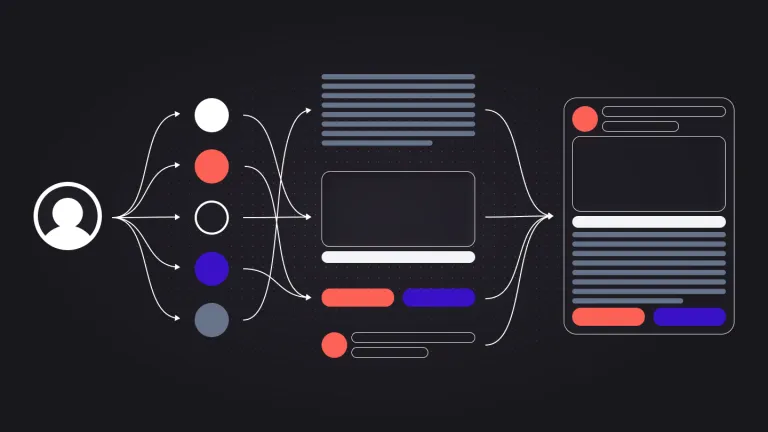
Why This Means Better, Not Just Faster
For you as a client, this is the part that counts. Faster output is easy to picture. Better output is less obvious, so it's worth being precise about why it happens.
When skilled people are freed from rebuilding the same button for the seventeenth time, that effort doesn't evaporate. It gets redirected into testing, refinement, and problem-solving. A form field can be generated in minutes, which means the remaining time goes into making sure it validates properly, works for someone using a screen reader, and behaves correctly on a patchy train-carriage mobile connection. Quality improves through concentration: fewer hours on mechanical tasks, more hours on the things that actually determine whether your website works for the people using it.
The Catch: AI Amplifies Good Systems
There's a crucial caveat, and it's where the difference between agencies becomes visible. AI doesn't perform equally everywhere. It performs brilliantly when it's working inside a well-defined system (clear components, named design tokens, documented patterns) and erratically when it isn't. Point an agentic tool at a coherent design system and it will extend it faithfully. Point it at a pile of inconsistent mockups and it will cheerfully generate inconsistency, at speed.
This is the quiet reason the AI conversation keeps looping back to fundamentals. The agencies getting genuine quality from these tools aren't the ones with the flashiest prompts; they're the ones whose brand and digital work was integrated from the start, with a structured system underneath for the AI to build on. The tooling rewards exactly the discipline that good digital-first teams already practise. AI is an amplifier, and an amplifier makes a strong foundation stronger and a weak one merely louder.
What to Look For
So when you're choosing who builds your website, the question isn't "do you use AI?" Nearly everyone does. The better questions are: who is directing it, and what are they building it on?
Look for a team that can explain clearly where AI accelerates their work and where human judgement still leads. Look for evidence of a real system (components, tokens, governance) rather than a folder of one-off screens. And be a little wary of anyone selling AI primarily as a discount. The value here isn't a cheaper website built by a machine; it's a better website, built faster, by people whose expertise is now pointed squarely at the decisions that matter most.
The new digital team isn't smaller or less skilled. It's the same craft, aimed higher, with the repetitive work handled and the human judgement turned up.

About the author
As Zoocha's Senior UI Designer, Dan is passionate about all things design. He loves taking ideas and turning them into results that look good and feel right to use. With a strong eye for detail, he's always thinking about how designs can be refined, simplified, or pushed further. He's always on the lookout for the next best thing in design, whether that’s new trends, tools, and better ways to build design systems.
How can we help?
-
Responsive Design Beyond Breakpoints: Just Because It Scales Doesn’t Mean It Works
Responsive design should …
-
Why We Need Agile Delivery More Than Ever
AI lowers the cost of bui…
-
Creating reusable components without bloating your design system
Reduce design system bloa…
-
User Research Isn't a Luxury. It's How You Get the Results You Need.
User research isn't a lux…


