Multi-Brand Design Systems: How to Utilise One System Across Many Brands


You've built a solid design system. Your buttons are consistent, your components are reusable, and your team finally has a single source of truth.
Then the challenge evolves: your organisation acquires a new brand, launches a sub-brand, or realises that three different microsites need to maintain distinct identities while sharing the same underlying infrastructure.
Suddenly, your design system needs to support multiple brand expressions. Your product team wants to maintain the premium aesthetic of Brand A while simultaneously supporting the playful, youth-focused Brand B. Marketing needs microsites that feel distinctly different yet share core functionality. And everyone's asking the same question: how do we maintain brand distinctiveness without rebuilding everything from scratch for each property?
Welcome to the world of multi-brand design systems, where the infrastructure supporting one brand expression must elegantly scale to support many.
The strategic foundation: brand architecture
Before diving into technical implementation, organisations face a fundamental strategic question: what's your brand architecture?
Branded house organisations, like Virgin (Virgin Atlantic, Virgin Media, Virgin Money), operate multiple offerings under one master brand. Sub-brands share core values and visual language, with variations mostly confined to specific use cases.
House of brands organisations operate differently: think Unilever, where Dove, Ben & Jerry's, and Lipton maintain completely independent identities. Most organisations fall somewhere between these poles, operating a hybrid architecture.
Understanding where your brands sit on this spectrum fundamentally determines what goes in your core system versus what remains brand-specific.
How design tokens enable brand flexibility
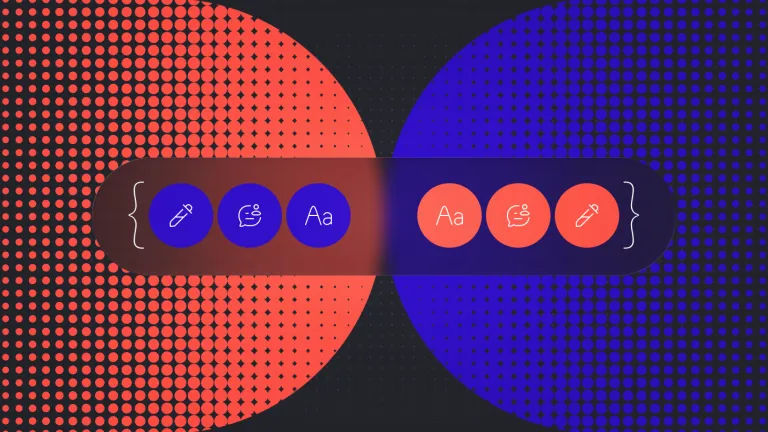
Here's where multi-brand systems become genuinely elegant: the same component can express dramatically different brand personalities without changing its underlying structure. A button remains a button, same interaction patterns, same accessibility features, same responsive behaviours, but it looks completely different across Brand A and Brand B.
The mechanism enabling this is design tokens, named variables that store design decisions and act as a translation layer between brand expression and technical implementation. Instead of hardcoding "use this shade of blue," components reference "colour-primary." When you swap brand themes, that single reference automatically points to the correct colour for that brand (navy for Brand A, teal for Brand B) without touching the component code itself.
This approach means switching brands doesn't require rebuilding components, you're simply swapping which token collection is active.
The core question: what's shared, what's not?
Every multi-brand design system faces the same strategic decision repeatedly: does this go in the core system or remain brand-specific?
Get this wrong, and you create two equally problematic outcomes. Put too little in the core system, and teams rebuild similar components differently, none of the efficiency benefits materialise. Put too much in the core, and you've constrained brand expression so severely that teams start working around the system.
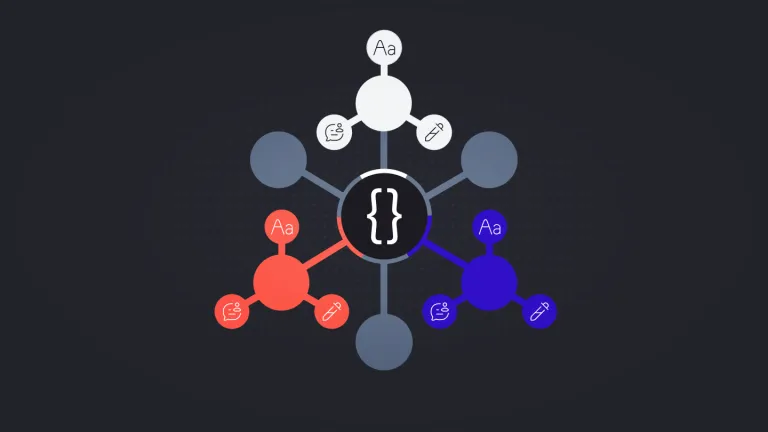
Organisations that do this well typically organise components into three categories:
Core components serve fundamental interactions shared across all brands, form fields, buttons, navigation patterns, modals. These appear everywhere and deliver maximum efficiency when built once properly.
Team components support specific product needs shared within a single brand but not broadly applicable, a specialised data visualisation for Brand A's analytics platform, a unique booking flow for Brand B's travel experience.
Product-specific components solve unique problems unlikely to appear elsewhere. These might exist only for a single property.
The decision about what level to build at isn't permanent, components can move between categories as patterns emerge.
Governance: who decides what changes?
Multi-brand systems often stumble not in technical implementation, but in decision-making processes. When five product teams need the same button to behave differently, who decides which version becomes canonical?
The answer typically involves some form of centralised oversight, whether a dedicated design system team or distributed maintainers working to shared standards. But here's what matters more than the governance model itself: you need a team that understands both brand strategy and technical implementation working together from the start.
The separation of brand work from digital work is where multi-brand systems fail. Brand strategists creating guidelines in isolation from developers who'll implement them. Designers creating mockups without understanding token architecture. Developers inheriting specifications without the context to make sensible decisions about what should be core versus brand-specific.
Organisations that get this right assemble teams combining brand strategy, design systems thinking, and technical implementation expertise. These teams can make informed decisions about what belongs in the core system, how to structure tokens for maximum flexibility, and where brand expression should override systematic consistency.
Back Roads Touring demonstrates this in practice: a shared platform foundation supports multiple tour brands including Grasshopper Adventures and Topdeck, each with distinct payment functionality and checkout flows, yet all operating from one foundational codebase. This centralised approach has dramatically reduced the effort spent managing updates and upgrades while accommodating each brand's unique functional needs.
Real-world implementation: what this looks like in practice
University College London demonstrates this at institutional scale, managing dozens of microsites across faculties, departments, and research centres. Each site maintains UCL's core brand identity while allowing individual units to express their distinct character. The Medical School feels appropriately serious and research-focused, the Bartlett School of Architecture emphasises visual creativity, yet both share the same underlying component library, accessibility features, and content management infrastructure. A core design system team maintains foundational components and brand standards, while individual faculties can extend and theme within established guardrails.
What successful implementations share: upfront investment in token architecture and core components, clear governance processes, and commitment to maintaining the system as living infrastructure rather than one-time deliverable.
The compounding benefits
Organisations that successfully implement multi-brand design systems report advantage patterns that compound over time:
Development efficiency increases exponentially. The first brand requires building the core system, significant investment. The second brand leverages most of that infrastructure, requiring primarily theming work. By the third and fourth brands, launch time drops dramatically.
Quality improves through concentration. When ten brands share one button component, that button receives concentrated testing and accessibility attention. Fix one issue, and ten properties benefit simultaneously.
Speed to market accelerates. Launching new microsites or supporting brand acquisitions becomes faster when you're working from established, proven infrastructure rather than building from scratch each time.
Moving forward
Building towards a multi-brand design system doesn't require revolutionary change overnight. Start by understanding your brand architecture, where do your brands sit on the branded house to house of brands spectrum? Audit existing components to identify patterns that appear repeatedly. Build token architecture before visual components, establish governance early, and treat the system as a product requiring ongoing investment.
Scaling design systems for real growth
Organisations managing multiple brands, sub-brands, or properties face a choice: build separate systems for each (expensive, inconsistent, inefficient) or invest in multi-brand infrastructure that scales with your portfolio.
The organisations thriving aren't those with the largest portfolios. They're organisations that recognised their brands share more than they differ at the interaction level, built systematic infrastructure to support this commonality, and established governance processes ensuring the system serves all brands effectively.
This isn't about stifling brand expression. Properly implemented multi-brand design systems liberate brands to express themselves distinctively while guaranteeing consistent quality, accessibility, and interaction patterns underneath. They enable organisations to launch new brands faster, maintain existing properties more efficiently, and deliver the consistent experiences users increasingly expect.

About the author
As Zoocha's Senior UI Designer, Dan is passionate about all things design. He loves taking ideas and turning them into results that look good and feel right to use. With a strong eye for detail, he's always thinking about how designs can be refined, simplified, or pushed further. He's always on the lookout for the next best thing in design, whether that’s new trends, tools, and better ways to build design systems.
How can we help?
-
Why We Need Agile Delivery More Than Ever
AI lowers the cost of bui…
-
Creating reusable components without bloating your design system
Reduce design system bloa…
-
User Research Isn't a Luxury. It's How You Get the Results You Need.
User research isn't a lux…
-
Digital Degradation: What it is and How to Prevent it
A UX audit reveals the sm…


