Digital Degradation: What it is and How to Prevent it


Is your digital product still performing as it should?
Digital experiences rarely fail overnight, but they do degrade gradually through small, incremental changes, neglected maintenance, shifting user expectations, and evolving technology. Without strong governance, even a well-researched product can become fragmented, inefficient, and frustrating to use.
Common causes of digital product degradation
Business first approach
Don’t let insider knowledge and internal opinions shape the experience. To keep your product performing, you need to check in regularly on how it’s working for your audience. Your product owners know the site inside out, but they’re often too close to spot the issues. They know every call to action, error message, and shortcut back to where they started - but do your users?
It’s important to avoid tunnel vision from an internal or stakeholder view of the product. Taking a step back, ask: how does your audience navigate, do they achieve what they came to do, and if not, why?
Feature bloat
“We always have requests for new features, but I’ve never been asked to take any out.”
As businesses grow, new functionality is added to meet commercial goals, respond to stakeholder requests, or keep pace with market trends. While each addition may be justified in isolation, it isn’t always assessed against the product’s strategic vision or the overall user experience.
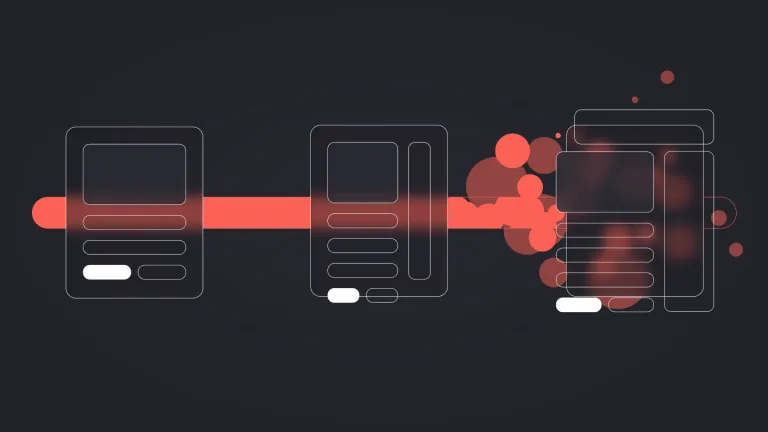
Over time, features can start to feel like bolt-ons shoehorned into existing flows, disrupting key journeys. Navigation expands, workflows become longer, and the original clarity of the experience erodes. What was once intuitive becomes overwhelming and confusing.
Put simply: if it’s hard for users to discover or complete a task, they will look for an alternative.
Design consistency
Digital products are rarely redesigned from scratch - they evolve through continuous updates. Different teams, designers, or agencies may contribute over the years, each applying slightly different design patterns, content styles, or technical approaches.
Without strong design governance or a well-maintained design system, inconsistencies multiply quickly. Buttons behave differently across sections, typography and spacing move away from the initial guides, and new or inconsistent interaction patterns appear. Each inconsistency may seem minor, but together they increase cognitive load and reduce user trust.
User needs and expectations
Digital standards aren’t static, they keep evolving. As users interact with best-in-class products, their expectations for speed, personalisation, accessibility, and mobile responsiveness increase. And they’re not only comparing you to your direct competitors.
They’re measuring your experience against the smooth, one-tap apps they use to book a taxi, order dinner, or plan a holiday. An experience that felt modern three years ago may now feel outdated or clunky, even if it technically functions the same way. Experiences must evolve to remain competitive and meet changing user expectations.
Content
Over time, content becomes outdated, duplicated, or misaligned with user needs. Promotions expire, service information changes, and organisational priorities shift. Without regular content audits, users encounter irrelevant messaging, broken links, and inconsistent tone. This erodes credibility, undermines authority, and can affect conversion performance.
Without regular content audits and clear ownership, issues include:
- A drop in relevance: users land on pages that don’t answer their questions, reflect old priorities, or push offers that no longer exist.
- Increased accuracy and compliance risks: outdated claims, old contact details, or stale policy content can cause confusion - and in some sectors, introduce governance or legal risk.
- Journeys that begin to fail: links rot, downloads go missing, forms change, and navigation becomes cluttered with near-duplicate pages, making it harder for users to complete tasks.
- An increasingly inconsistent experience: tone of voice, terminology, and messaging diverge as different teams publish content at different times, reducing clarity and brand coherence.
A UX audit is a practical way to spot these issues early and prioritise what to fix.
UX Audits: Prevention is better than cure
Conducting a UX audit is one of the most effective ways to uncover usability issues, align digital experiences with user needs, and drive measurable improvements. Whether you are reviewing a website, web application, or mobile product, a UX audit provides a structured evaluation of how well the experience performs and where it can be optimised.
Evidence-based decisions
A common reason products stall is stakeholder disagreement: marketing wants one thing, product another, engineering another - all focused on business needs. A UX audit reframes the conversation around evidence, such as:
- analytics signals (drop-offs, time-on-task proxies, rage clicks, dead ends)
- heuristic and usability findings (e.g. “users can’t tell what to do next”)
- accessibility and readability issues that affect real people immediately
- journey mapping that shows where intent and experience don’t align
Instead of debating preferences, teams debate priorities, because the problems are visible and documented.
Quick wins
Not every improvement requires a large redesign or costly development. We classify our findings by priority and scale, and identify small changes that can deliver significant impact, such as:
- clarifying a CTA label or adding missing microcopy
- fixing broken hierarchy on key pages (heading size, spacing, emphasis)
- removing distractions from conversion paths
- improving form error handling and validation
- aligning navigation labels with the words users actually use
These fixes can often be delivered quickly and cost-effectively, providing measurable uplift before investing in larger pieces of work. We deliver a prioritised backlog based on impact vs. effort, so you don’t end up with a long laundry list, you get a strategic plan you can act on.
What you get
- Heuristic + accessibility review
- Analytics review
- Top issues + supporting evidence
- Prioritised recommendations / backlog (impact vs. effort)
Keep your digital products performing at their best with a UX audit. We can review your entire website, assess key user journeys, or focus on specific landing pages and entry points to identify opportunities for improvement.

About the author
As Zoocha's Creative Director, Amanda loves helping organisations solve complex problems through thoughtful design and user-centred thinking. She combines creativity, strategy, and collaboration to create digital experiences that are intuitive, accessible, and engaging. Whether leading discovery workshops, shaping design direction, or mentoring creative teams, Amanda is driven by a passion for delivering work that makes a genuine difference to users and clients alike.
How can we help?
-
Responsive Design Beyond Breakpoints: Just Because It Scales Doesn’t Mean It Works
Responsive design should …
-
Why We Need Agile Delivery More Than Ever
AI lowers the cost of bui…
-
Creating reusable components without bloating your design system
Reduce design system bloa…
-
User Research Isn't a Luxury. It's How You Get the Results You Need.
User research isn't a lux…


